Who signs your due diligence certificate
The signature at the bottom of a certificate is a responsibility, not a formality. It names the lawyer who stands behind each finding, and the firm whose professional responsibility and professional indemnity insurance back the work. This guide explains who signs, who checks the work, and why no one else can change a legal conclusion.
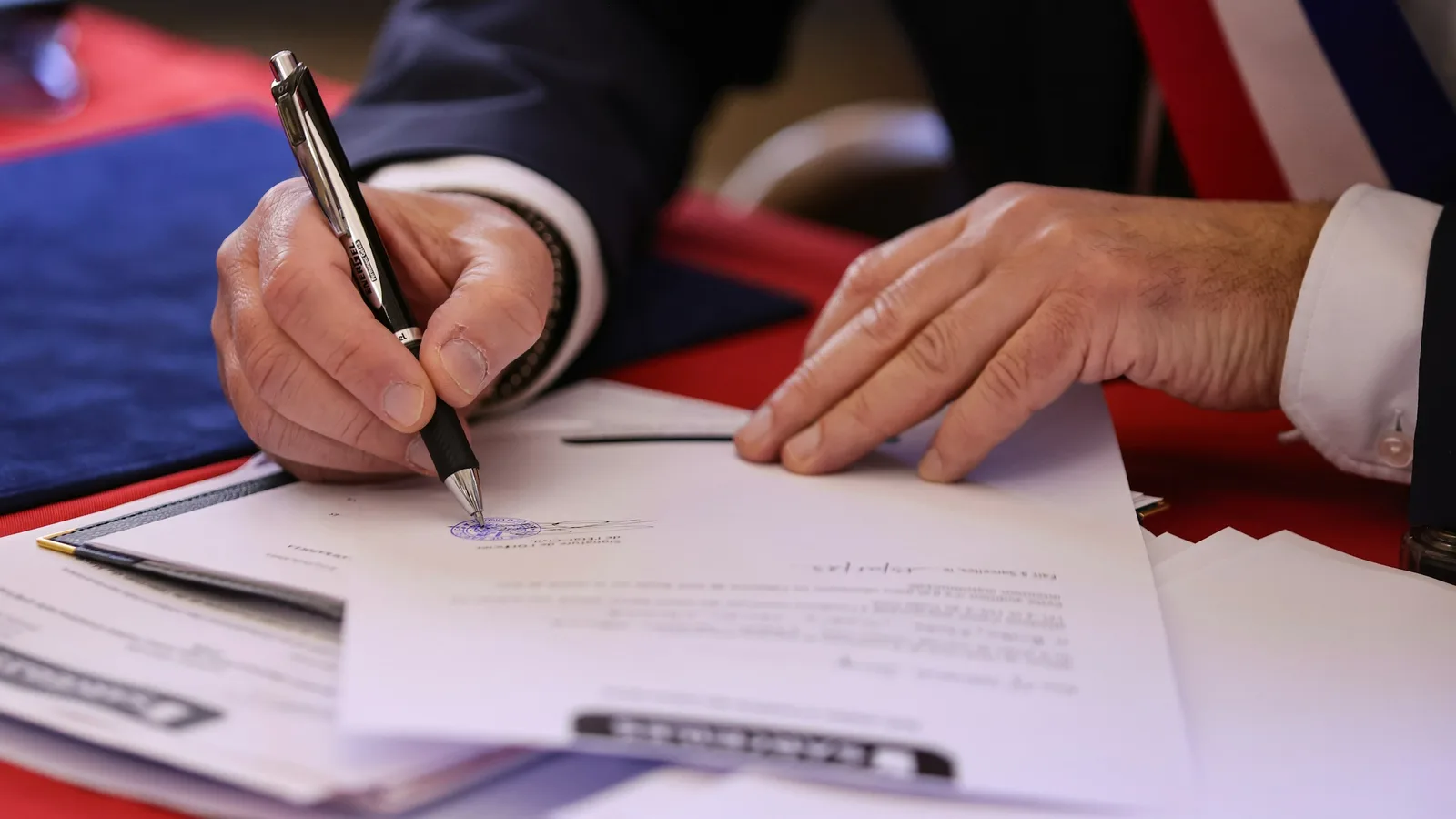
A named lawyer, a licensed firm
The certificate is signed by a named licensed partner lawyer — a named individual, not an anonymous department. The lawyer signs under the firm's own professional responsibility and professional indemnity insurance. The firm is the author of the legal work: it produces every legal finding in the certificate, and it is responsible for them.
Suradeed does not sign the certificate. The legal findings are produced and signed by the licensed firm alone, under its own responsibility — which is why the certificate names the lawyer and the firm, not the platform.
What Suradeed does instead
Suradeed does the parts of a verification that are not legal work. It defines the verification protocol, coordinates the work, controls its quality and delivers the result. The protocol is the same for every dossier, whichever firm works it.
Quality control never touches the merits. When the firm records its findings, a Suradeed reviewer checks consistency and evidence — and can do one of two things: accept a finding, or return it to the firm with a reason. A reviewer can never edit a legal conclusion. The boundary is a rule of the process, not a preference.
The evidence ledger
Every finding in the certificate rests on listed source documents. The evidence ledger is that list: for each finding, the source documents with their issuing office, reference number, date and reviewer. Nothing in the certificate is an impression; every conclusion points to a document you can check.
The ledger is also how a red flag is delivered. A red flag — an unregistered access road, a missing FET form, a building permit that does not exist — is a finding backed by its documents, delivered as part of the certificate. Firms are never scored on how many red flags they find: a red flag is a deliverable, not a failure.
Independence is contractual
Before a dossier is opened, the partner firm records a conflict and capacity declaration. The firm confirms that it has no conflict of interest on the matter and the capacity to carry it out — that declaration is part of the acceptance of the dossier.
Independence is contractual on the Suradeed side too. Suradeed accepts no commission, referral fee or benefit from any seller, developer, agent or broker — it is written into the relationship, not a policy statement.
The region decides which partner firms are eligible for a dossier. Coverage is Koh Samui first, then Phuket, then Bangkok; within a covered region, eligibility is decided by the region, and the firm retained for the dossier also records its conflict and capacity declaration before the work starts.
What Suradeed is, and is not
Suradeed is not a law firm and gives no legal advice. Every legal finding and recommendation in a certificate is produced and signed by a licensed Thai law firm, which is responsible for it. Suradeed defines the verification protocol, coordinates the work, controls its quality and delivers the result.
The checkout shows one quoted price. It includes the partner firm's fee — owed to the firm and collected by Suradeed as payment agent, not Suradeed's revenue — and Suradeed's platform and coordination fee. Your invoice records both components separately.
FAQ
Is Suradeed a law firm?
No. Suradeed is not a law firm and gives no legal advice. It defines the verification protocol, coordinates the work, controls its quality and delivers the result — every legal finding is produced and signed by a licensed Thai law firm, which is responsible for it.
Who is responsible for the legal findings?
The named licensed partner lawyer who signs the certificate, and the firm whose professional responsibility and professional indemnity insurance back the signature. The firm is the author of the legal work; it produces the findings and is responsible for them.
Can Suradeed change a finding?
No. Quality control never touches the merits. A Suradeed reviewer accepts a finding or returns it to the firm with a reason — a reviewer can never edit a legal conclusion. If a finding needs to change, it is the firm that changes it.
Which firm will work on my dossier?
The region decides which partner firms are eligible for a dossier. Before the work starts, the firm records a conflict and capacity declaration — a firm that has a conflict on your matter cannot take the dossier.
Know what you are buying before you commit.
Suradeed coordinates a structured review of Thai property documents with licensed, independent law firms — for a fixed price, agreed before any work starts.
Get a price for your property